The Last 1%: The Virtues of an Effective Strategy for Achieving Final Completion

It’s always an honor and a pleasure to guest post over at Christopher Hill’s Construction Law Musings, easily one of the most informative, thought-provoking and regularly updated construction blawgs out there.

Photo by Sura Nualpradid / FreeDigitalPhotos.net

Photo by Sura Nualpradid / FreeDigitalPhotos.net

This time around, I’ve penned a brief thought piece on why contractors should make project close-out a top priority, focusing on how finishing strong can impact your bottom line, liability exposure and business reputation.

I hope you’ll check it out.

Leave a comment

Filed under Construction Risk Management

N.C. General Assembly Mulls Liens on Leaseholds

Committee Co-Chair Rep. Sarah Stevens

Representative Sarah Stevens

I had the pleasure yesterday of attending the first of four meetings of the “House Committee on Mechanics’ Liens and Leasehold Improvements,” a non-standing legislative research committee of the North Carolina House of Representatives co-chaired by Representatives Sarah Stevens (R-Mt. Airy) and Dean Arp (R-Monroe).  The Committee’s work is focused primarily on whether the state’s mechanics’ lien statutes should be tweaked to strengthen the lien rights of contractors performing work for project owners who lease, rather than own, the property being improved.

Represenative Dean Arp

Represenative Dean Arp

Current statutory law allows contractors to place a lien on so-called “leasehold estates” (see N.C. Gen. Stat. § 44A-7(7)), but as Raleigh construction attorney Henry Jones, counsel to the Carolinas Electrical Contractors Association and N.C. Association of Plumbing & Mechanical Contractors, explained, such liens, in practice, are “illusory,” for two reasons: (1) when the lease is terminated, so are any lien rights asserted against the tenant’s leasehold interest; and (2) a successful levy against a leasehold generally means accepting not only the lease’s benefits, but also its burdens, including the obligation to make rent payments.

The 2011 Pete Wall Plumbing decision of the N.C. Court of Appeals, which Research Division staff member Shelly DeAdder did a terrific job of summarizing, is a vivid example of how a contractor can be left holding the bag when a leasehold interest is terminated.  As Representative Stevens put it, “Poor Pete Wall did the work, but didn’t get paid,” and the expiration of its lien rights when the leases at issue were terminated by the record owner represented an “unfair result.”  Judge Steelman’s concurring opinion in Pete Wall Plumbing, while acknowledging the majority opinion “reaches the correct legal conclusion under the present state of our statutory and case law,” called upon our state legislature to “consider revising the provisions of Chapter 44A to prevent this unjust result.”

The big question for the Committee to consider over the coming weeks is this: under what circumstances might it be appropriate to permit a contractor performing a tenant improvement to place a mechanics’ lien on the record owner’s “fee simple” interest?

Continue reading

2 Comments

Filed under Feature story, Lien Law, State law, policy & news, Subcontractors

Just Got Terminated for Convenience? Five Steps You Should Take Right Now.

Image by Hans Braxmeier / Pixabay.com

Did your contract just get axed? Read on. (Picture by Hans Braxmeier / pixabay.com)

Most private owners negotiate for a contract clause permitting them to terminate a construction agreement without regard to the quality of the contractor’s performance.  These so-called “termination for convenience” clauses come in handy when, for example, an owner’s financing runs dry and a project must be halted.  A termination for convenience clause allows an owner to cancel a project without materially breaching the contract and avoid paying the contractor its anticipated lost profit on unperformed work.

Continue reading

Leave a comment

Filed under Construction Risk Management, Termination Claims

When the Plans & the Code Don’t Mix, Can a Sub Sue a Design Professional for Negligence?

Photo by CGehlen via Flickr

Photo by CGehlen via Flickr *

Talk about being stuck between a rock and a hard place.

You’re an electrical sub who notices during your performance that installing certain light fixtures per plans would run afoul of the manufacturer’s instructions and violate the building code.  You bring the issue to the attention of your general contractor, who submits an RFI.  The architect’s response directs you to proceed per plans.  The system later malfunctions, and you incur significant cost researching the problem, ultimately concluding that the installation method directed by the architect is the culprit.  The architect refuses to pay your costs for researching the issue.

Might you have a claim for negligence against the architect?

Continue reading

3 Comments

Filed under Building Codes, Construction Risk Management, NC case law, Subcontractors

When the Well Runs Dry: Seven Tips for Guarding Against a Failure in Project Financing

Photo by inkknife_2000 via Flickr *

Photo by inkknife_2000 via Flickr *

Last Thursday, November 14, 2013, I participated in a webinar hosted by Engineering News-Record® on “The Five Risks You Never Saw Coming,” which is still available on-demand and free to the public on ENR’s webinar page.

The first risk addressed by the panel is the subject of this post: the risk that a private owner’s financial well might run dry.

As one of the panelists, Atlanta construction attorney Gina Vitiello (@GinaVitiello on Twitter), discussed, project funding can fail for a number of reasons.  The owner might run out of capital funds, perhaps because it overestimated the availability of project funding or underestimated the total costs of the endeavor.  Or the owner might lose its financing, for example by defaulting on its loan obligations.  Or the lending institution financing the project might fail.

No matter how or why the financial well might run dry, the consequences for the prime contractor, construction manager at risk or design-builder can be catastrophic.  What can be done to guard against this risk?

Continue reading

1 Comment

Filed under Construction Risk Management, Contract Review & Negotiation, Feature story

AAA’s New Optional Appellate Arbitration Rules Seek to Bridge the Gap Between Arbitration and Appellate Rights.

While many construction industry participants favor the finality of binding arbitration, some are put out by the inability to appeal an unfavorable award (see my previous blog post for more on the limited bases for challenging arbitration awards in court).

Photo by Eric Kilby via Flickr *

Photo by Eric Kilby via Flickr *

The American Arbitration Association® (“AAA”) has announced a new set of rules intended to bridge that gap.  As of November 1, 2013, the AAA has made available for use its “Optional Appellate Arbitration Rules,” the purpose of which was articulated by AAA in its press release:

The objective of arbitration is a fair, fast and expert result that is achieved economically.  Consistent with this goal, an arbitration award traditionally will be set aside by a court only where narrowly defined statutory grounds exist.  Sometimes, however, the parties may desire a more comprehensive appeal of an arbitration award within the arbitral process.  …  In order to provide for an easier, more standardized [appellate] process, the AAA has developed these Optional Appellate Rules.

I greeted news of the Appellate Rules with much curiosity and, truth be told, a fair amount of skepticism: how could AAA marry up a meaningful appellate process with the streamlined nature of arbitration?  And so before reviewing the new rules, I jotted down a list of questions I hoped they would address.  Those questions, and what I discovered upon reviewing the rules, follow:

Continue reading

Leave a comment

Filed under Arbitration

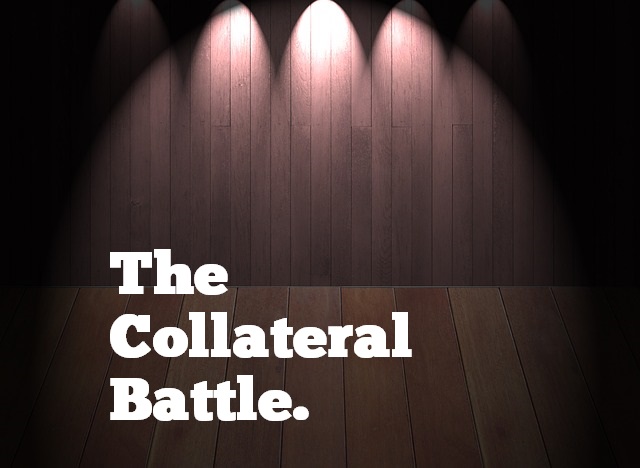
4th Circuit Stages “The Collateral Battle” Between A Contract Surety & Its Principal’s Trustee in Bankruptcy

stage-233086_640Prelude:

Friends, underwriters, bond claim managers: lend me your eyes, and behold the saga of a surety that accepted collateral security from a financially unstable principal as an inducement for the issuance of new Miller Act performance & payment bonds.  The drama unfolds when the principal files for bankruptcy protection within 90 days of the collateral transfer and the bankruptcy trustee — that most formidable of foes! — seeks to avoid the transfer as preferential.  Fear not, dear readers!  Our hero fights gallantly in In re ESA Environmental Specialists, Inc., and is richly rewarded in this Fourth Circuit Court of Appeals production.

Continue reading

Leave a comment

Filed under Federal case law, Surety Law

Wednesday Word to the Wise: Verify Your Performance & Payment Bonds

Yesterday my Twitter feed delivered a pair of tweets about a rash of fraudulent contract surety bonds in Tennessee:

https://twitter.com/matthewdevries/status/395264837514969088

The owner/obligee got “lucky” in the case of the Regency Hotel demolition project at the Memphis International Airport, in that it discovered the fraud before contract award; that at least provided an opportunity to rebid the contract and award it to a properly bonded prime contract.  Goes without saying that the discovery of a forged or otherwise fraudulent bond during contract performance can be a much messier proposition.

What can owners/obligees do to protect themselves?  Verify your bonds.  How?  I suggest utilizing the resources furnished by the Surety & Fidelity Association of America (@SuretyFidelity) on its “Verify Your Bond” webpage. There you will find information needed to locate a particular bonding company and inquire about the authenticity of a specific bond.  You’ll also find a current list of surety companies participating in the Association’s Bond Authentication Program.

Stay vigilant, owners/obligees.

2 Comments

Filed under Payment Bonds, Performance Bonds, Surety Law

Top 10 Things to Know About North Carolina’s New Design-Build/Public-Private Partnership Law

This past summer, the N.C. General Assembly passed and Governor McCrory signed into law groundbreaking legislation authorizing the use of design-build, design-build bridging and public-private partnerships in the delivery and financing of public construction projects in the state.  The legislation is sure to alter North Carolina’s public procurement landscape drastically and influence the complexion of the state’s construction industry, particularly at the design and prime contractor levels.

DBP3Last Wednesday, October 23, I attended an excellent panel discussion covering key aspects of House Bill 857 (“HB 857”) sponsored by Carolinas AGC Foundation, AIA North Carolina (@AIA_NC), the Professional Engineers of NC (@ProfEngNC), United Minority Contractors of North Carolina and the American Council of Engineering Companies of North Carolina.  Based on that discussion and my own review and analysis of the legislation, here are my top ten observations:

Continue reading

3 Comments

Filed under Feature story, Local law, policy & news, Payment Bonds, Project Delivery Systems, Public Bidding, State law, policy & news

Construction Tweets of the Week for the Week Ending Friday, October 25, 2013

1.  Scott Wolfe of Zlien.com tweeted about the pros and cons of filing a claim of lien on real property in advance of a construction mediation.  The linked blog post notes that while a claim of lien might enhance the claimant’s negotiation leverage, it might simultaneously generate adversarial tension up the chain, which in turn could make a mediated resolution more difficult to achieve.

It’s an interesting strategic question, particularly now that N.C. Gen. Stat. § 44A-23(d) expressly gives subs and suppliers the option to file their lien claims within 120 days of the prime contractor’s date of last furnishing, as opposed to their own date of last furnishing.  More than ever, timing is everything.    Continue reading

Leave a comment

Filed under Construction Risk Management, Delay Claims, Federal law, policy & news, Federal Procurement, Lien Law, State law, policy & news, Subcontractors